By Jason Carillo, Production Manager · Posted July 15, 2026 · 25+ years of experience · 8-time HomeStars “Best of” winner · Serving Toronto, the GTA, Southern Ontario & cottage country
On this page
- What is a crawl space vapour barrier?
- What is crawl space encapsulation?
- Key differences: moisture, cost & longevity
- When to use a vapour barrier vs. full encapsulation
- Signs you need full encapsulation
- Crawl space cost ranges in Ontario
- Why cottage & rural crawl spaces need it
- How DryShield approaches your crawl space
- Frequently asked questions
Vapour barriers and encapsulation are often confused because both use plastic sheeting, but they solve different problems. A vapour barrier manages dampness rising from bare soil. Encapsulation seals the entire crawl space — ground, air and liquid water — as one controlled system. Choosing the wrong one wastes money and leaves your home exposed to mould, wood rot and rising humidity.
Key Takeaways
- A vapour barrier (6–10 mil) only slows ground-moisture evaporation; it does not stop seepage, humid air or standing water.
- Encapsulation (12–20 mil liner + sealed vents + insulation + drainage + humidity control) protects the whole crawl space long term.
- If a crawl space has ever had water, mould or a musty smell, a vapour barrier is not enough — full encapsulation is the correct fix.
- GTA clay-heavy soil and cottage-country high water tables make full encapsulation the right call for most Ontario homes.

What is a crawl space vapour barrier?
A vapour barrier (also spelled “vapor barrier”) is a polyethylene sheet — usually 6 to 10 mil thick — laid across the crawl-space floor to slow moisture evaporating from bare soil into the air above. It is the minimum moisture-control measure and is often the original builder’s installation.
What a vapour barrier does:
- Reduces ground-moisture evaporation from exposed dirt floors
- Lowers ambient humidity modestly when soil is the only moisture source
- Is inexpensive and fast to install
What a vapour barrier does not do:
- It does not stop liquid water intrusion, seepage or flooding
- It rarely seals the foundation walls or vents, so humid outside air still enters
- Thin 6-mil film tears easily and degrades over years of foot traffic and pests
In plain terms: a vapour barrier manages dampness from the ground. It is not a waterproofing system.
What is crawl space encapsulation?
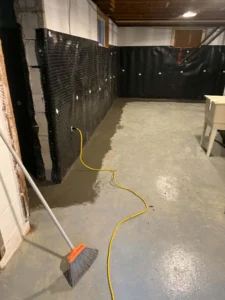
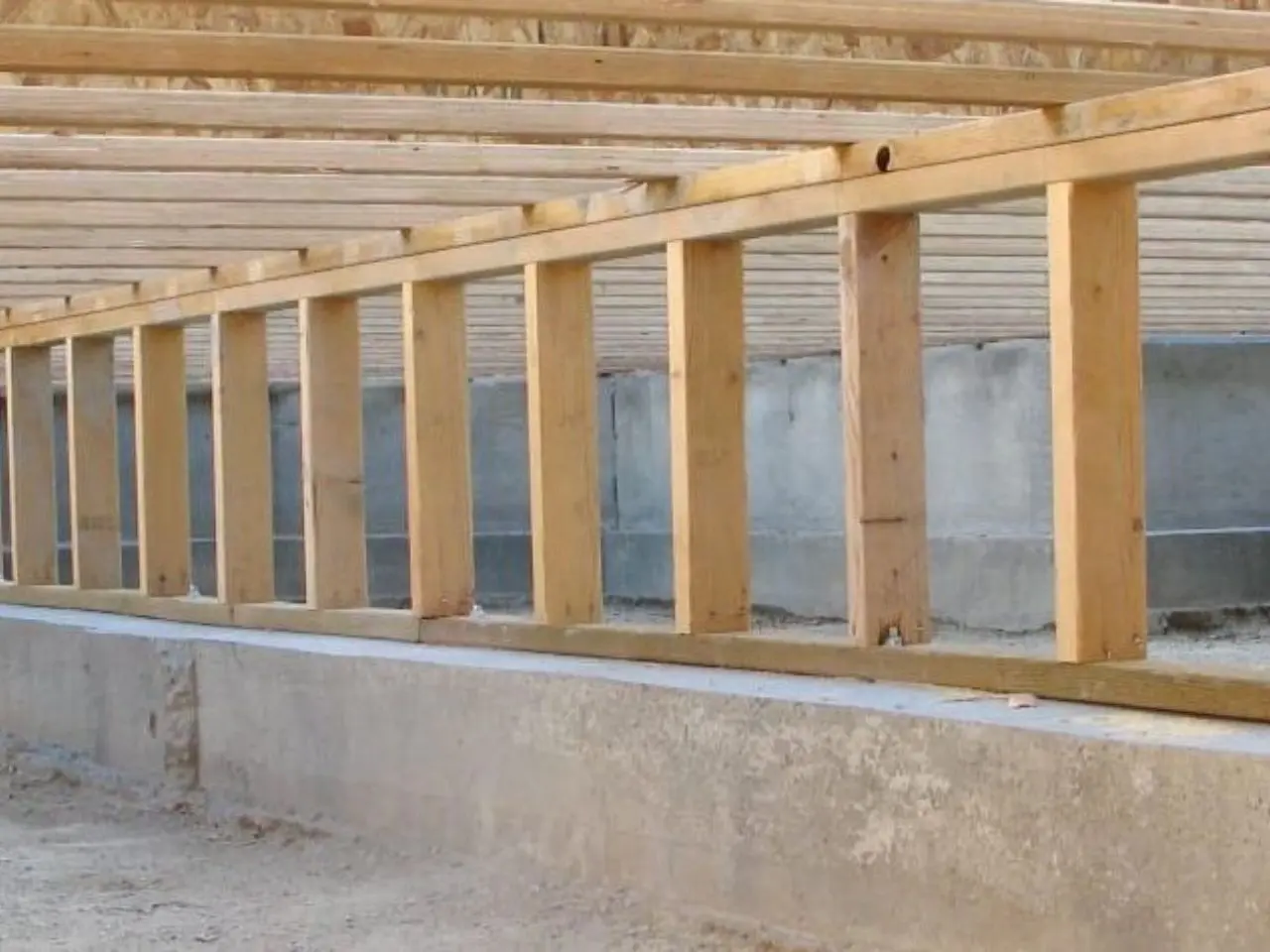
Encapsulation turns a vented, earth-floored crawl space into a sealed, conditioned space. A heavy-duty liner (commonly 12–20 mil, reinforced) is installed across the floor and up the foundation walls, seams are taped, vents are sealed, and moisture is actively managed.
A full encapsulation system typically includes:
- A reinforced 12–20 mil liner on floor and walls, sealed at all seams
- Sealed foundation vents to block humid outdoor air
- Insulation on rim joists and walls for energy efficiency and condensation control
- A drainage path and sump where water intrusion is possible
- A dehumidifier or conditioned-air supply to hold humidity in check
What encapsulation delivers: a dry, controlled environment that resists mould, wood rot and pests; better indoor air quality (crawl-space air rises into the home through the “stack effect”); lower heating and cooling load with warmer floors above; and long-term protection for the structural wood framing.
In plain terms: encapsulation manages the whole moisture problem — ground, air and liquid water — as a sealed system.
Key differences: moisture, cost & longevity
The two are often confused because both involve plastic sheeting. In practice they solve different problems.
In 2026, basic crawl space encapsulation in Ontario runs about $4,000–$8,000 and a full system with drainage, insulation and a dehumidifier $7,000–$15,000+ (roughly $7–$15 per square foot, before HST). For a full breakdown by system and region — including cottage country — see our crawl space encapsulation cost guide.
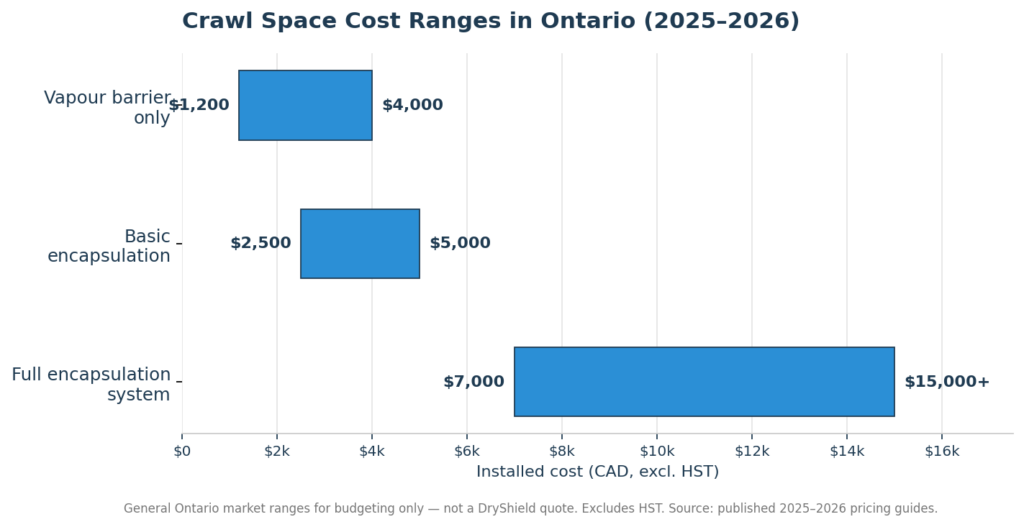
*Ranges reflect published 2025–2026 North American pricing guides and exclude HST. Actual pricing depends on site conditions — a free on-site assessment is the only way to get a firm number.
DryShield is an eligible contractor for the City of Toronto, Peel and Halton basement-flooding subsidy programs, which can offset qualifying moisture-protection work. A free assessment will confirm what applies to your property and whether any subsidy fits your project.
Why cottage & rural crawl spaces almost always need encapsulation
Homes and cottages in Muskoka, Haliburton and rural Southern Ontario face conditions that make a thin vapour barrier inadequate:
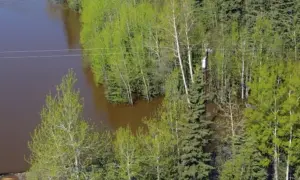
- High water tables and lakeside sites push ground moisture and liquid water into crawl spaces
- Seasonal or intermittent heating lets humidity and condensation build during unoccupied months
- Wooded, poorly drained terrain keeps soil saturated long after rain and snowmelt
- Wide temperature swings drive condensation on cold framing and ductwork
- Wildlife and pests readily enter through open foundation vents in rural settings
For these properties, a sealed encapsulation system with drainage and humidity control protects the structure year-round — including through the months no one is there to notice a problem. A vapour barrier alone leaves the space open to air, pests and water.
Related guides: for seasonal and rural properties, see our guides on cottage sump pumps & battery backup and closing & opening your cottage.
How DryShield approaches your crawl space
- Free on-site assessment — a specialist inspects moisture sources, soil, water table, mould and framing condition across the GTA and cottage country.
- Right-sized recommendation — a vapour barrier upgrade or full crawl space encapsulation with drainage, insulation and humidity control, matched to what the space actually needs.
- Sealed, warrantied installation — reinforced liner, sealed vents and moisture management, backed by DryShield’s transferable lifetime warranty on eligible work.
DryShield is fully insured with $5M liability coverage, offers free quotes, and carries a transferable lifetime warranty on eligible work. Call 1-800-277-5411 to book a free crawl-space assessment.
Frequently asked questions
What is the difference between a vapour barrier and crawl space encapsulation?
A vapour barrier is a thin (6–10 mil) plastic sheet on the crawl-space floor that only slows ground-moisture evaporation. Encapsulation seals the entire space — floor, walls and vents — with a heavy 12–20 mil liner plus insulation, drainage and humidity control. Encapsulation manages ground moisture, humid air and liquid water; a barrier does not.
Is a vapour barrier enough for my Ontario crawl space?
A vapour barrier is only enough if the crawl space is completely dry, has no musty smell or mould, and has never had water intrusion. Because much of the GTA sits on moisture-holding clay soil and many rural sites have high water tables, most Ontario crawl spaces need full encapsulation rather than a barrier alone.
How much does crawl space encapsulation cost in Ontario?
General Ontario market ranges run roughly $4,000–$8,000 for basic encapsulation and $7,000–$15,000+ for a full system with insulation, drainage and a dehumidifier — about $7–$15 per square foot before HST. Cost depends on crawl-space size, moisture severity and any mould or structural repair. A free assessment gives a firm price.
Does crawl space encapsulation stop standing water and flooding?
Encapsulation stops water when it includes drainage and a sump, not just a liner. The sealed 12–20 mil membrane blocks ground moisture and humid air, while an integrated drainage path and sump pump manage liquid water. A vapour barrier alone cannot control standing water or seepage.
Do cottage and rural crawl spaces really need encapsulation?
Yes — cottage and rural crawl spaces in Muskoka, Haliburton and rural Ontario usually need encapsulation. High water tables, lakeside locations, seasonal heating and poorly drained wooded soil drive moisture and condensation, and open vents admit pests. A sealed system with humidity control protects the structure year-round, including the months the property is unoccupied.
How long does crawl space encapsulation last?
A quality encapsulation system generally lasts 15–20+ years, with premium reinforced liners lasting longer, versus just a few years for a thin vapour barrier that tears and degrades. Longevity depends on liner thickness, install quality and ongoing humidity control.
Can I install a crawl space vapour barrier myself?
You can lay a basic vapour barrier yourself, but DIY sheeting rarely seals the walls, vents or seams, so humid air and seepage still get in. Full encapsulation adds drainage, sealed vents and humidity control that need professional installation. In damp GTA and cottage crawl spaces, a professional system is the reliable long-term fix.
What thickness of vapour barrier or liner do I need?
Basic vapour barriers use 6–10 mil polyethylene, while full encapsulation uses a reinforced 12–20 mil liner that resists tears from foot traffic and pests. Thicker, reinforced liners last far longer and stand up to Ontario’s damp, freeze-thaw conditions. DryShield recommends the right thickness after inspecting your crawl space.
Does crawl space encapsulation help with mould and indoor air quality?
Yes. Because much of your main-floor air rises from the crawl space through the stack effect, sealing and drying it reduces mould spores, musty odours and humidity throughout the home. Encapsulation paired with a dehumidifier keeps humidity low, which stops mould growth and improves the air your family breathes.
Will encapsulating my crawl space lower energy bills and warm the floors?
Encapsulation seals air leaks and insulates the crawl space, so the floors above feel warmer and your furnace and air conditioner work less. Homeowners often notice steadier temperatures and lower humidity. Savings vary by home, but a sealed, insulated crawl space typically improves comfort and efficiency through Ontario winters.
Do I need a dehumidifier after encapsulating a crawl space?
In most Ontario and cottage crawl spaces, yes. Sealing stops new moisture from entering, but a dehumidifier or conditioned-air supply keeps relative humidity below the level where mould and wood rot occur. For unoccupied cottages, a monitored dehumidifier protects the structure through the months no one is there.
How long does a crawl space encapsulation installation take?
Most crawl space encapsulations take one to three days, depending on size, moisture severity and whether drainage, a sump or mould remediation are required. A simple liner-and-vent-seal job is faster; a full system with drainage and insulation takes longer. DryShield gives a firm timeline after a free on-site assessment.
Related reading: Crawl space encapsulation vs. spray foam insulation — which do you need?