By Jason Carillo, Production Manager · Updated July 2026 · 25+ years of experience · Serving Toronto, the GTA & cottage country
Why homeowners trust DryShield: Rated 4.9/5 from 282 Google reviews · 8-time HomeStars “Best of” winner · A+ BBB rating · $5M liability coverage, fully insured · Lifetime transferable warranty · Serving Toronto, the GTA, Southern Ontario & cottage country. Call 1-800-277-5411.


Key takeaways
- Warning signs: musty smell, condensation or standing water, mould, cold or cupping floors, high humidity.
- Root causes: ground moisture, humid air through vents, poor drainage, or a high water table.
- It affects the whole house — the stack effect pulls crawl-space air into your living space.
- Left alone it gets expensive: mould remediation, rotted joists and pest damage cost far more than fixing the moisture.
- The lasting fix is encapsulation with drainage and humidity control — free assessment at 1-800-277-5411.
On this page
- Signs of a crawl space moisture problem
- What causes crawl space moisture
- Why the problem doesn’t stay in the crawl space
- The cost of ignoring it
- How to fix crawl space moisture for good
- Frequently asked questions
A wet crawl space is easy to ignore — until the musty smell reaches the living room, the floors turn cold, or an inspector finds mould before a sale. This guide covers how to recognize a crawl space moisture problem, what causes it in Ontario homes, what it costs if you wait, and how it’s permanently solved.
Signs your crawl space has a moisture problem
Watch for these warning signs — any one of them means moisture is at work below your floor:
- A musty or earthy smell in the house, strongest near floor vents or the basement.
- Condensation, damp soil or standing water in the crawl space.
- Mould or white, chalky efflorescence on walls, joists or insulation.
- Cold, cupping or soft floors on the level above.
- High indoor humidity, sticky summer air, or windows that sweat.
- Rusting fasteners, ducts or metal in the crawl space.
- Sagging or fallen insulation that has absorbed moisture.
| Warning sign in your home | Likely crawl space cause | Recommended fix |
|---|---|---|
| Musty or earthy odour in the home | Mould or mildew growing on joists, insulation, or bare soil | Mould cleanup plus full encapsulation with a sealed vapour barrier |
| Condensation or “sweating” on ducts, pipes, or floors | Humid outside air condensing on cooler crawl space surfaces | Vapour barrier plus a crawl space dehumidifier to control humidity |
| Sagging, soft, or bouncy floors above | Wood rot in joists or subfloor from prolonged dampness | Structural repair, then moisture control (encapsulation and drainage) |
| Standing water or persistently damp soil | Groundwater seepage or poor exterior drainage | Interior drainage with a sump pump, followed by encapsulation |
| Rodents or insects nesting in the crawl space | Open vents and exposed soil that attract and shelter pests | Seal vents and entry points, then encapsulate the space |
| Higher indoor humidity, dust, or allergy symptoms | The “stack effect” drawing crawl space air into living areas | Full encapsulation with conditioned or dehumidified air |
What causes crawl space moisture in Ontario
Most crawl space moisture comes from one or more of these sources:
- Ground moisture: water vapour evaporates up through bare soil floors all year.
- Humid air through vents: open foundation vents let warm, humid outside air in, which condenses on cool surfaces — the biggest driver in summer.
- Poor drainage & grading: downspouts and slopes that send rainwater toward the foundation.
- High water table & clay soil: common across the GTA and cottage country, holding water against the foundation.
- Plumbing or foundation leaks: a slow leak can keep a crawl space damp indefinitely.
Why a crawl space problem doesn’t stay in the crawl space
Homes breathe from the bottom up. The stack effect — warm air rising and escaping through the upper floors — pulls replacement air up from the crawl space, so an estimated 40–50% of the air on your ground floor originates below. If that air is humid and carries mould spores, it circulates through your living space. That is why a damp crawl space shows up as musty rooms, allergy symptoms, and higher humidity throughout the house — not just underfoot. Left unaddressed, the same moisture rots framing, corrodes metal and invites pests.
The cost of ignoring a crawl space moisture problem
Moisture damage compounds. What starts as a musty smell becomes mould, then rotted framing, then structural repair — each stage far more expensive than the last. The chart below shows typical Ontario repair costs once problems are left to spread.
How to fix crawl space moisture for good
Partial fixes — a bit of grading, a dehumidifier, or a loose vapour sheet — rarely hold on a genuinely wet or vented crawl space. The lasting solution addresses moisture at every entry point:
- Find the source — a free on-site inspection identifies ground moisture, venting, drainage or leaks.
- Manage the water — interior drainage and a sump where standing water or seepage is present.
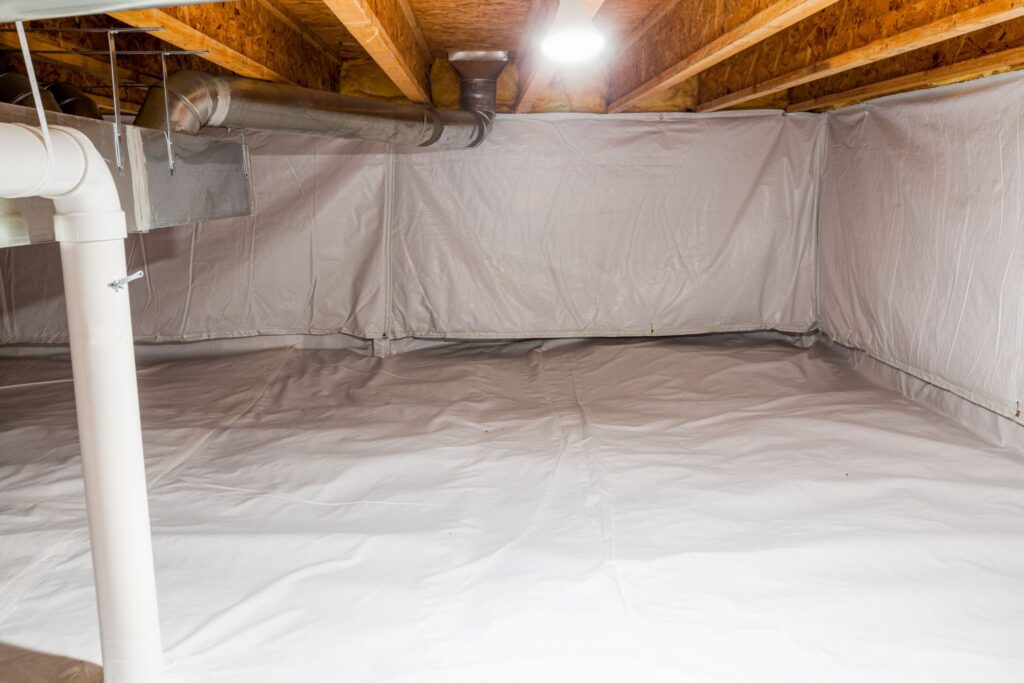
- Seal the space — a reinforced liner over the floor and walls, plus sealed vents.
- Control humidity — a crawl-space dehumidifier keeps relative humidity low year-round.
That complete system is crawl space encapsulation. To see whether it pays off for your home, read is crawl space encapsulation worth it?, or check typical pricing on our crawl space encapsulation cost page. Call 1-800-277-5411 for a free assessment.
Frequently asked questions
What are the signs my crawl space needs encapsulation?
Common signs include a musty or earthy smell in the house, condensation or standing water in the crawl space, mould or white efflorescence on walls, rusting metal, cupping or soft ground-floor floors, high indoor humidity, and cold floors in winter. Any one of these points to a moisture problem that a sealed, humidity-controlled crawl space is designed to solve.
Why is my crawl space wet or damp?
A wet crawl space usually comes from ground moisture evaporating up through bare soil, humid outside air entering through open vents and condensing, poor exterior drainage or grading directing water toward the foundation, or a high water table — common on Ontario clay soils and near lakes. Often it is a mix, which is why a diagnosis matters before choosing a fix.
Why is my crawl space humid in summer?
In summer, warm humid outside air enters a vented crawl space and hits the cooler foundation walls and ductwork, condensing into moisture — the same way a cold drink sweats. That condensation feeds mould and wood rot. Sealing the vents and controlling humidity with an encapsulation system stops this seasonal cycle.
What causes a musty smell in my crawl space or house?
A musty smell is the odour of mould and mildew growing on damp wood, insulation and soil in the crawl space. Because the stack effect pulls crawl-space air up into your living space, that smell rises into the house. Removing the moisture source and sealing the crawl space eliminates the conditions that create the odour.
Is crawl space mould dangerous to my health?
Crawl space mould can affect indoor air quality and may trigger allergies, asthma and respiratory irritation, particularly for children, older adults and sensitive individuals. Since roughly half the air on your ground floor comes up from the crawl space, mould spores below can circulate through the home. Controlling moisture is the way to stop mould from returning.
How does crawl space air affect the rest of my house?
Through the stack effect: warm air rising in the house draws replacement air up from the crawl space, so an estimated 40-50% of your ground-floor air originates below. If that air is humid, musty or full of mould spores, it moves into your living space — which is why a moisture problem in the crawl space is really a whole-home air-quality problem.
Can a wet crawl space cause structural damage?
Yes. Sustained moisture leads to wood rot in joists, beams and subfloor, corrosion of fasteners and metal, and an ideal environment for termites and carpenter ants. Over time this can cause sagging or soft floors and expensive structural repairs. Replacing rotted framing typically costs far more than encapsulating the crawl space before the damage starts.
Do crawl space moisture problems attract pests?
Yes. Damp, dark crawl spaces attract termites, carpenter ants, rodents and other pests that are drawn to moisture and softened wood. Open vents give them easy entry. Sealing and drying the crawl space removes both the moisture and the access points, making it far less hospitable to pests.
What is crawl space condensation and why does it happen?
Condensation is water that forms when humid air meets a cooler surface — foundation walls, ducts or pipes — in the crawl space. It is most common in summer when warm outside air enters through vents. Even without any liquid water intrusion, condensation alone can keep a crawl space wet enough to grow mould and rot wood.
Should I worry about radon in my crawl space?
A crawl space with a bare dirt floor and open vents can be a pathway for radon, a naturally occurring soil gas, to enter the home. A sealed encapsulation liner with proper detailing helps limit soil-gas entry and can be paired with a radon mitigation system where testing shows elevated levels. If you are concerned, have your home radon-tested.
Can I fix crawl space moisture without full encapsulation?
Sometimes partial measures help — improving exterior grading and downspouts, adding a vapour barrier, or running a dehumidifier — but on a genuinely wet or vented crawl space these rarely solve the problem on their own. Full encapsulation (sealed liner, sealed vents, drainage and humidity control) addresses the moisture at every entry point, which is why it lasts.
How urgent is a wet crawl space?
Fairly urgent. Moisture damage compounds: mould spreads, wood weakens and pests move in the longer it sits, turning a manageable job into a costly structural repair. Standing water, a strong musty smell, or visible mould should be assessed promptly. A free inspection identifies the source and the right fix before the problem escalates.
What our Ontario customers say
DryShield is rated 4.9/5 from 282 verified Google reviews across Toronto, the GTA, Southern Ontario and cottage country.